The Trezor login process is one of the most important steps in managing and securing your digital assets. As cryptocurrencies continue to evolve, users need dependable ways to protect their holdings from cyber threats, unauthorized access, and online vulnerabilities. Trezor, known for its pioneering role in hardware wallet technology, offers a secure and user-friendly login system that ensures users remain in control of their private keys at all times. Understanding how the login works not only helps you navigate the wallet smoothly but also strengthens your overall security practices. This guide explains the Trezor login process, common issues, safety measures, and best practices for maintaining full protection of your crypto assets.
Trezor is a hardware wallet, which means it operates differently from software wallets or exchange logins. You do not “log in” with a traditional username and password. Instead, the device itself acts as the secure entry point. When you connect your Trezor to a computer or mobile device, the authentication process is carried out between the hardware wallet and the companion application. Your private keys never leave the device, and because of this, the login process is fundamentally safer than browser-based or cloud-based systems.
This concept is essential because the Trezor login is not stored on any external server. The security lies in the physical device, your PIN, your recovery seed, and the encrypted communication between the wallet and the interface. By understanding this core principle, users can better appreciate why Trezor remains one of the most trusted tools for storing and managing cryptocurrency portfolios.
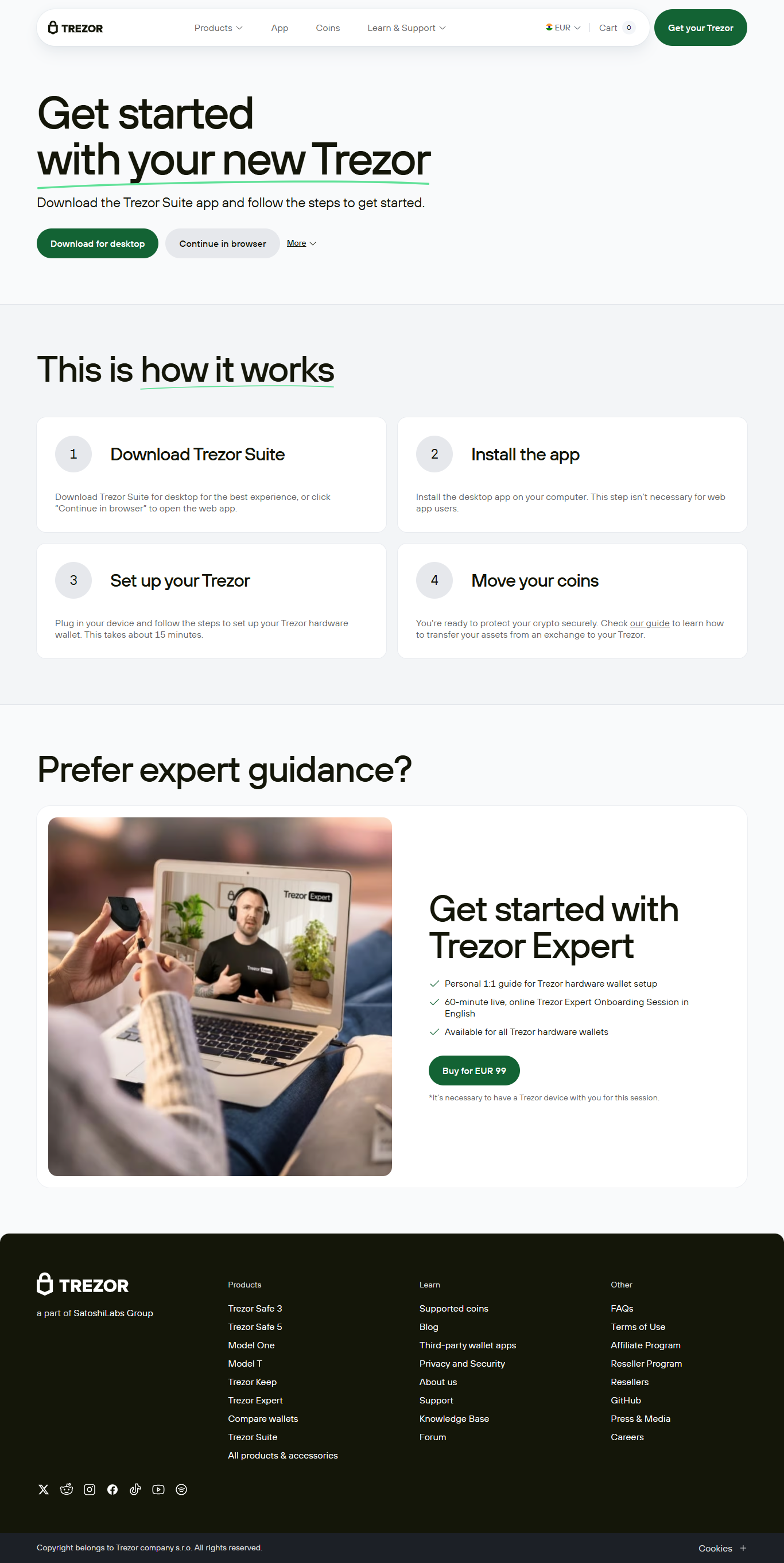
When you begin the Trezor login process, everything starts by connecting your hardware wallet to your device using a USB cable. Once the connection is established, you launch the compatible interface where your Trezor model communicates securely with the application. The system detects your device, and you are guided to enter your PIN. This PIN plays a vital role because it prevents unauthorized users from accessing your wallet even if they physically possess the device.
After entering your PIN through the randomized on-screen layout, the device verifies the input internally. This method protects your PIN from key-loggers, malware, and screen-recording attempts. Once the PIN is confirmed, you are granted access to your wallet dashboard. Here, you can view your balances, monitor transactions, send and receive digital assets, and adjust device settings. The login process is entirely local and encrypted, ensuring no sensitive data is exposed.
The PIN is the primary layer of protection during the Trezor login. It prevents unauthorized entry and ensures that only the rightful owner can operate the device. If an incorrect PIN is entered multiple times, Trezor uses a time-delay security mechanism, making each successive attempt increasingly slower and more difficult for attackers. This significantly reduces the risk of brute-force attacks.
Alongside the PIN, the recovery seed represents the ultimate safeguard for your wallet. While it is not part of the standard login process, it becomes crucial if your Trezor device is lost, damaged, or reset. The recovery seed must be written down and stored safely, as it is the only way to restore your account. Treating your recovery seed with extreme caution ensures you remain in control of your digital assets at all times.
This concept is essential because the Trezor login is not stored on any external server. The security lies in the physical device, your PIN, your recovery seed, and the encrypted communication between the wallet and the interface. By understanding this core principle, users can better appreciate why Trezor remains one of the most trusted tools for storing and managing cryptocurrency portfolios.